The Drama That Changed Everything
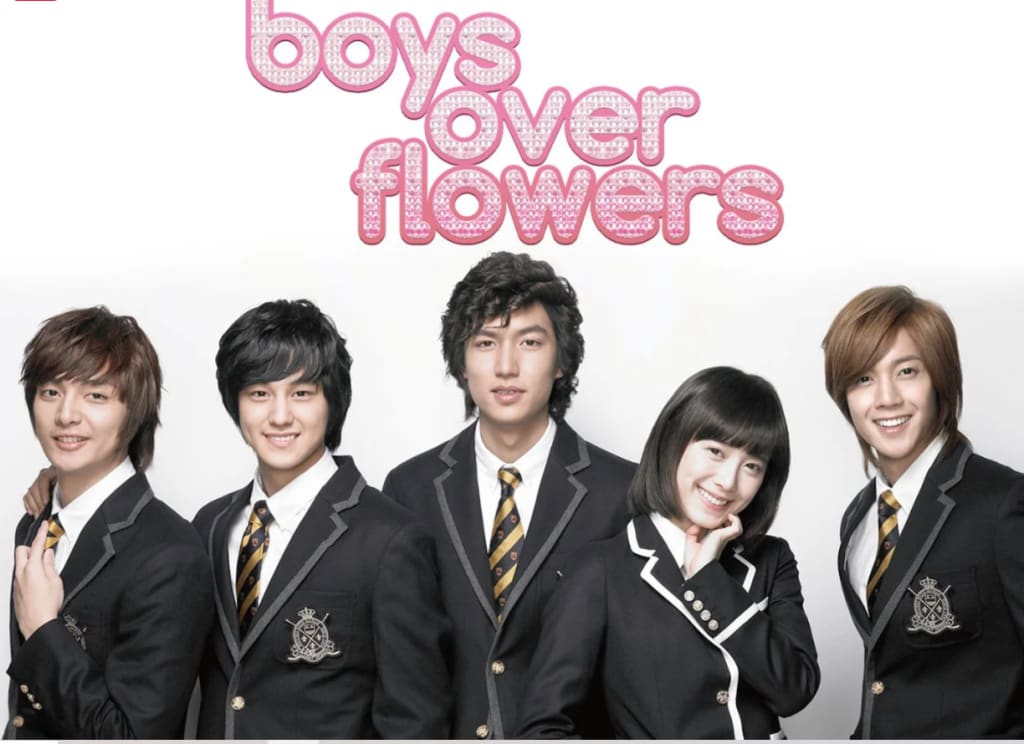
Before BTS, before Squid Game, before the Korean Wave swept across the globe, there was Boys Over Flowers. This 2009 drama about Geum Jan-di, a working-class girl who receives a scholarship to the most elite high school in Korea, and her turbulent relationship with F4 — four impossibly wealthy, impossibly handsome heirs led by the arrogant Gu Jun-pyo — became the gateway drug for millions of international fans discovering Korean dramas for the very first time.
Is the story melodramatic? Absolutely. Are the fashion choices questionable by today standards? Without question. But Boys Over Flowers is not just a drama — it is a cultural artifact, a time capsule of a moment when Korean entertainment was about to conquer the world. The drama was so popular in Japan, China, and Southeast Asia that it single-handedly revived tourism to its filming locations and turned Lee Min-ho into a pan-Asian superstar overnight. Its success paved the way for every K-drama that followed, proving that Korean stories could resonate with global audiences in ways no one had imagined.
Lee Min-ho and Ku Hye-sun: Chemistry That Defined a Generation
Lee Min-ho became a household name across Asia with his portrayal of Gu Jun-pyo. His signature curly hair, his over-the-top arrogance, and his eventual transformation into a devoted (if still possessive) boyfriend created the template for the "tsundere chaebol heir" character that K-dramas still use today. Ku Hye-sun as Geum Jan-di brought scrappy determination and genuine warmth to a character who refuses to be bullied by anyone — no matter how powerful.
The supporting cast, including Kim Hyun-joong, Kim Bum, and Kim Joon as the other F4 members, rounded out a group of actors who would all go on to major careers. But it is the sheer, unapologetic drama of it all — the amnesia plotlines, the evil mothers, the noble sacrifices — that makes Boys Over Flowers such an unforgettable watch, even years later.
Frequently Asked Questions
Is Boys Over Flowers based on a manga?
Yes! Boys Over Flowers is based on the Japanese manga Hana Yori Dango by Yoko Kamio. It has been adapted in Japan, Taiwan, China, and Korea, with the Korean version becoming the most globally successful.
Where can I watch Boys Over Flowers?
Boys Over Flowers is available on Netflix, Viki, and other streaming platforms worldwide with subtitles in multiple languages.
Is Boys Over Flowers worth watching in 2024?
While some aspects have aged poorly, Boys Over Flowers remains essential viewing for understanding K-drama history and experiencing the drama that started the global Hallyu wave. Approach it with an appreciation for camp and nostalgia.


:strip_icc():format(webp)/kly-media-production/medias/3897616/original/009826000_1641557417-968000899.jpg)
